Why an MRI Doesn't Tell You the Cause of the Problem
An MRI shows you anatomy. It does not automatically explain pain, dysfunction, or impaired performance.
An MRI is an incredibly useful diagnostic tool, but one of the biggest mistakes in musculoskeletal care is assuming that because an abnormality appears on a scan, it must be the cause of the patient's symptoms.
For PT3, this is an important distinction: finding a structural abnormality is not the same as identifying the reason someone hurts or cannot perform.
1. Structure does not equal symptoms
What the MRI shows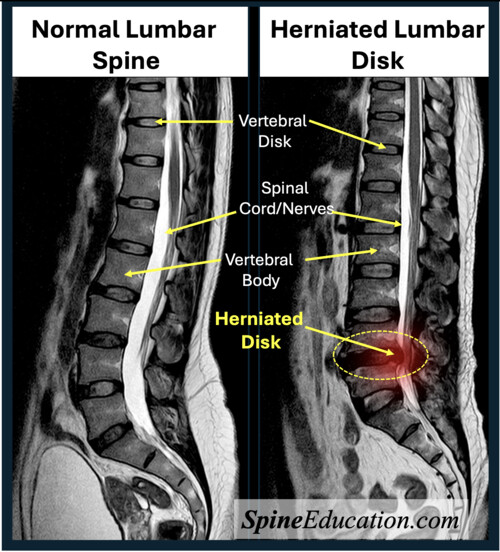
-
Disc degeneration
-
Disc bulges or herniations
-
Joint changes
-
Tendon abnormalities
-
Structural changes in tissues
These findings describe what the tissues look like—not necessarily whether they are causing symptoms.
What the clinical examination investigates
-
Which movements reproduce symptoms?
-
Does changing position or load change the symptoms?
-
Are strength, mobility, coordination, or endurance impaired?
-
Does the patient's presentation fit the imaging findings?
-
What functional demands exceed the person's current capacity?
The distinction matters because structural changes are common in people without pain. Research has found that disc degeneration, bulging, and other MRI findings increase in prevalence with age, even in asymptomatic individuals.
The implication: an abnormal MRI may be relevant, incidental, or only one contributing factor.
2. An MRI is a static picture of a dynamic system
An MRI generally captures anatomy while a person is lying relatively still. But human movement involves a constantly changing interaction among the nervous system, muscles, joints, connective tissues, balance, and external forces.
Consider an athlete who experiences back pain while accelerating, cutting, or lifting.
The MRI may reveal a disc bulge. However, the scan does not directly tell you:
-
How the athlete coordinates the trunk and hips during acceleration.
-
Whether the athlete tolerates repeated high-force loading.
-
How movement strategy changes with fatigue.
-
Whether symptoms depend on speed, direction, or training volume.
-
How the athlete responds when the task is modified.
The MRI describes a structure. The physical examination evaluates how the person functions.
Neither replaces the other.
3. The abnormality may not be the pain generator
Imagine three people with nearly identical lumbar MRI findings.
Person A: No pain
Has a disc bulge but lifts, runs, and performs daily activities without symptoms.
Person B: Pain with prolonged sitting
Has a similar disc bulge, but symptoms vary with posture, duration, and activity.
Person C: Pain with radiating leg symptoms
Has similar imaging findings but also demonstrates neurological signs that may help establish clinical relevance.
The same structural finding can have very different clinical significance.
The important question is not simply, "What does the MRI show?"
It is:
"Does this finding explain the patient's specific symptoms, examination findings, and limitations?"

Scott Corley
Contact Me